Keeping the U.S. economy as #1 in the world requires electricity. Lots of electricity to power Data Centers and manufacturing.
Energy and progress have gone hand in hand since the Industrial Revolution. The history of energy and electricity generation has been recorded on this blog here, here , here, here and here. Then, just a few days ago, Dr. Joseph Fournier authored and outstanding article on Substack entitled, “Every Great Leap in Prosperity Followed the Same Rule“. The common thread is the importance of energy to power progress from muscle power to mechanization and now to AI or SI (Super Intelligence). Let’s take a few energy intensive industries in my state of South Carolina as examples of the correlation of wise use of energy and human and economic progress. First, let’s look at the NUCOR Steel mills in Berkley County and Florence. These were built in S.C. for many reasons, high on the list of advantages was reasonable cost electricity. Electricity is so important to NUCOR that they are looking into the future to build their own 500 MW nuclear Fusion Power plant.
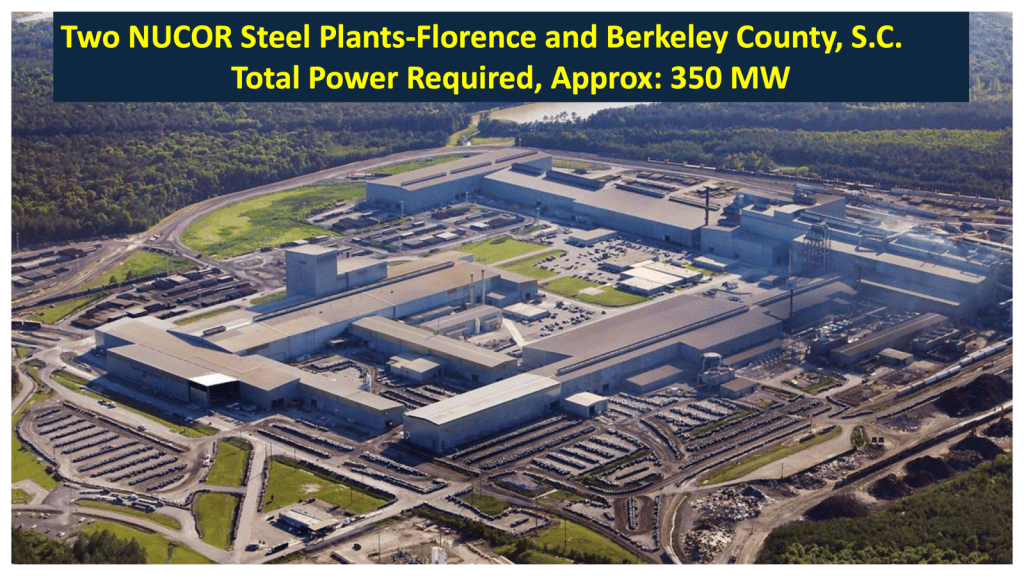
The electric arc furnaces of NUCOR use huge quantities of electricity.
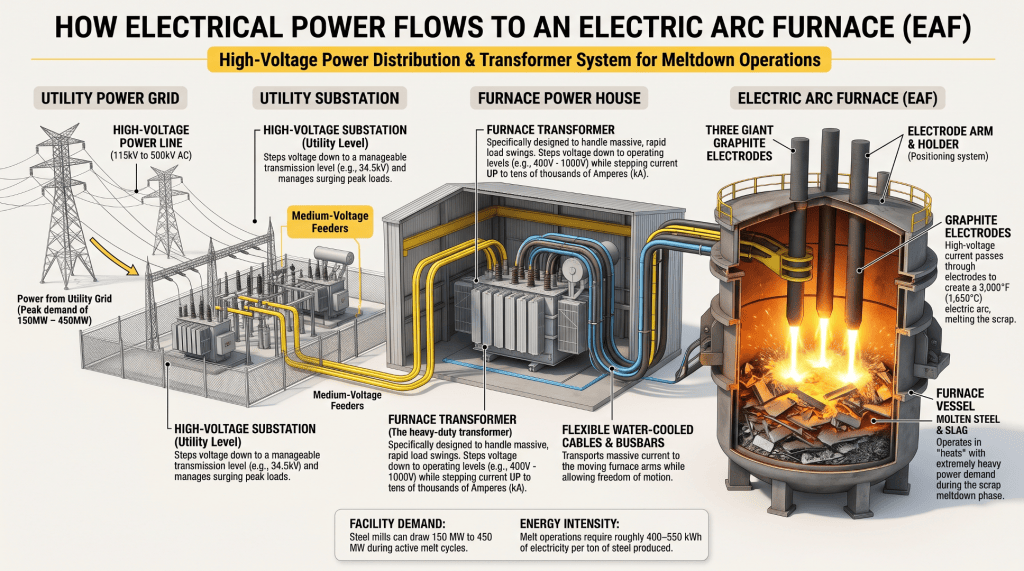
The American steel production is important to support U.S. manufacturing and also to provide hundreds of jobs for South Carolinians.
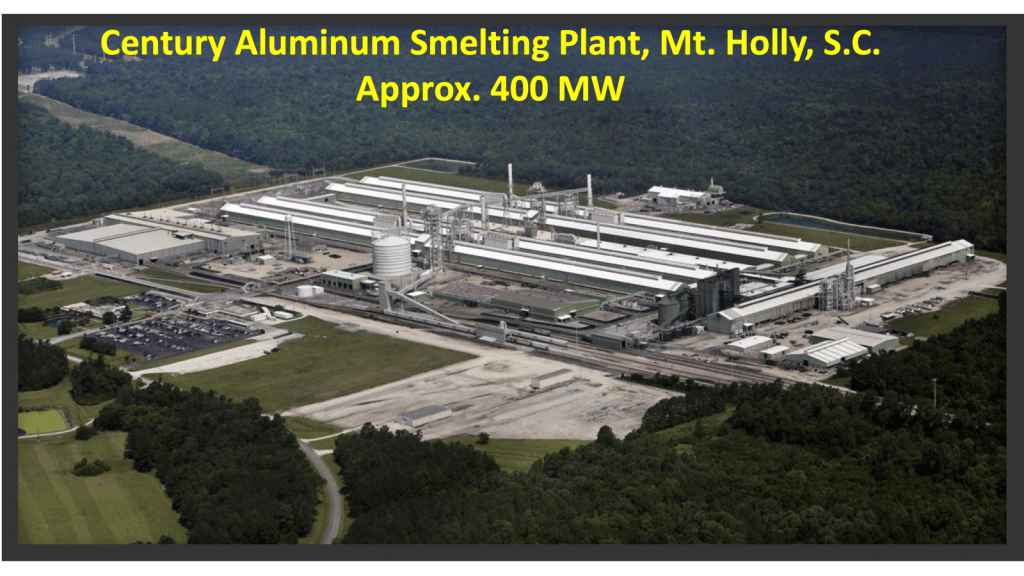
Another energy intensive critical industry is aluminum smelting. The main reason ALUMAX chose South Carolina to build the Mt. Holly smelter is, reasonable cost electricity. The ALUMAX smelter is currently owned and operated by Century Aluminum and when at full capacity uses about 400 MW of electricity. Like NUCOR, Century Aluminum also provides hundreds of jobs.
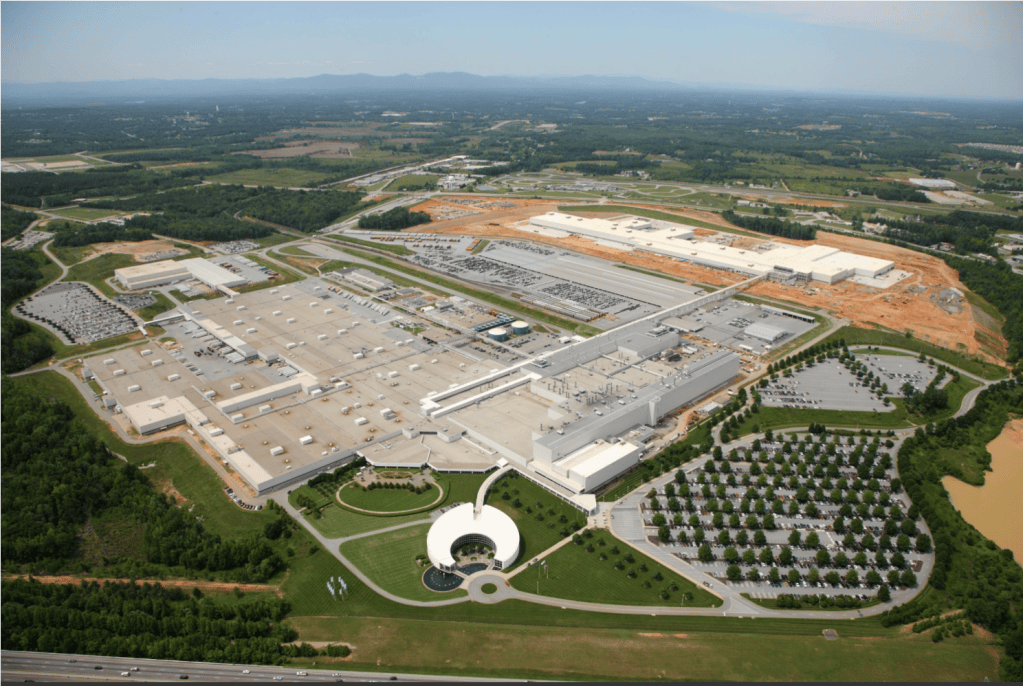
Then there is the BMW automobile manufacturing complex near Spartanburg. Not as energy intensive as NUCOR or Century but still, it requires about 80 MW of power for welding, painting and manufacturing operations within the facility.
NUCOR, Century Aluminum and BMW remain important industries in S.C. and they will continue to require large amounts of Bulk Electric Power. There are other important industries in S.C. that together use about a third of the electricity consumed in S.C. Borrowing a phrase from Dr. Fournier’s article, “The Future is abundance for those who build it”. This brings us to AI or more correctly, building SI Data Centers. For the U.S. to keep our #1 position in Data Centers, we will need to provide an ample Bulk Power Supply of electricity. Electricity demand is growing all across the U.S. and Don Spellman and I wrote a blog post about concerns that it will be difficult for new generating capacity to be built in time to meet the growing demand. Here are a few examples of large Data Centers and the enormous electricity requirements to power them. The mentioning of NUCOR and Century Aluminum plants is to show the energy intensity of Data Centers. The new and large Data Centers actually use similar or more electricity than a large aluminum smelter or steel mill.
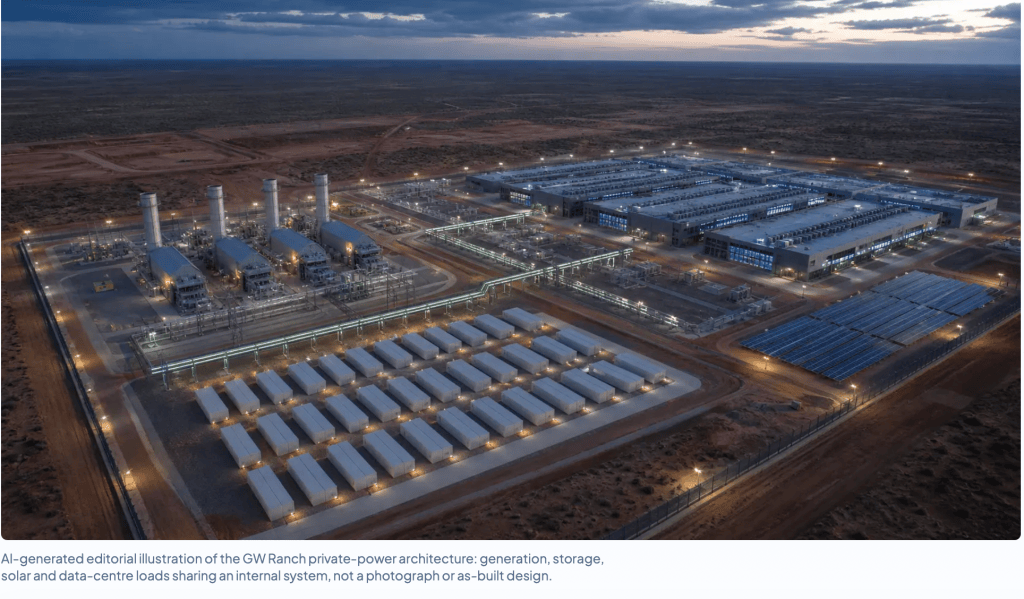
The Amazon GW Ranch Data Center planned for West Texas will use up to 7.65 GW of electricity. This is one of the largest of over 8434 Data Centers in the U.S. Data Centers are projected to use about 5% of the total U.S. electricity production in a few years.
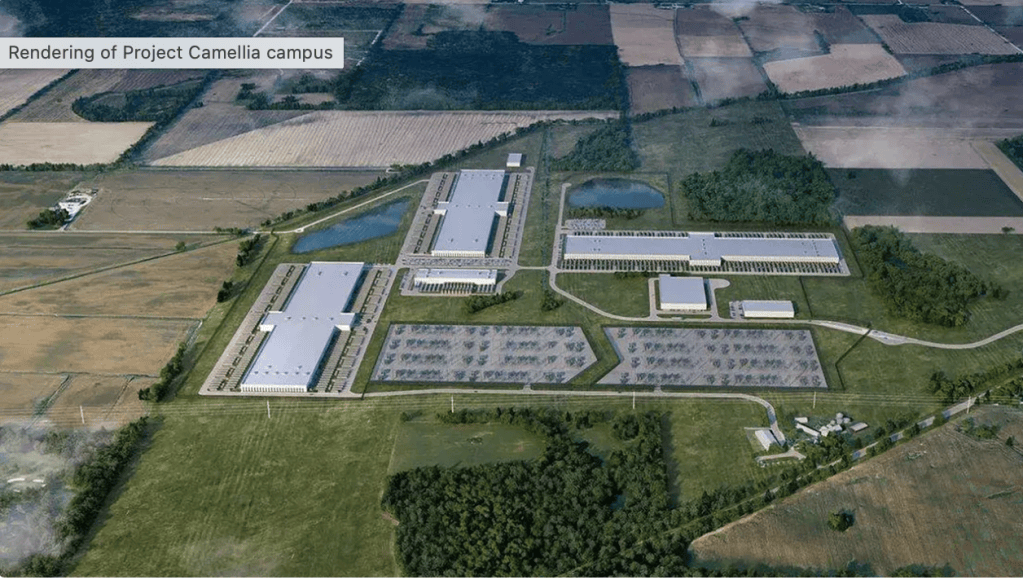
The Effingham Data Center planned near Savannah, Georgia will use about 3,200 MW of electricity.
Getting closer to home in S.C. there is the 1,000 MW Data Center planned for Colleton County near Walterboro.
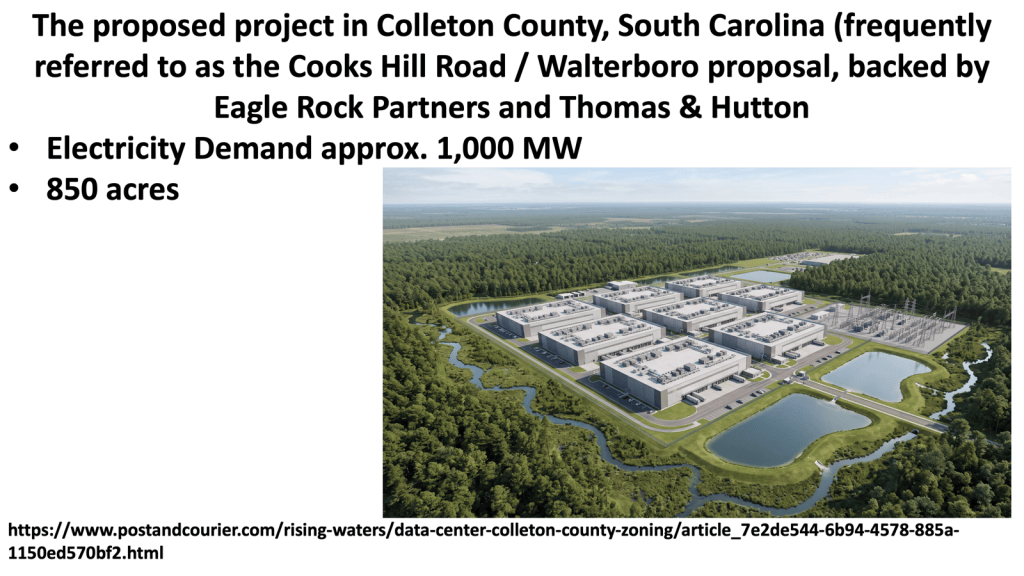
Energy and Electricity Power the Future, So What are the Potential Sources of Primary Energy to Power these and other Projects?
There are eight plausible sources of the enormous amount of energy needed to power the future of manufacturing and SI Data Centers. These are ranked in order of proven capability to generate power 24/7. Only the first five are capable of 24/7 generation of sufficient Bulk Power electricity to power large Data Centers such as those mentioned in this article.
- Nuclear
- Natural Gas
- Coal
- Hydroelectric
- Biomass
- Wind
- Solar
- Geothermal
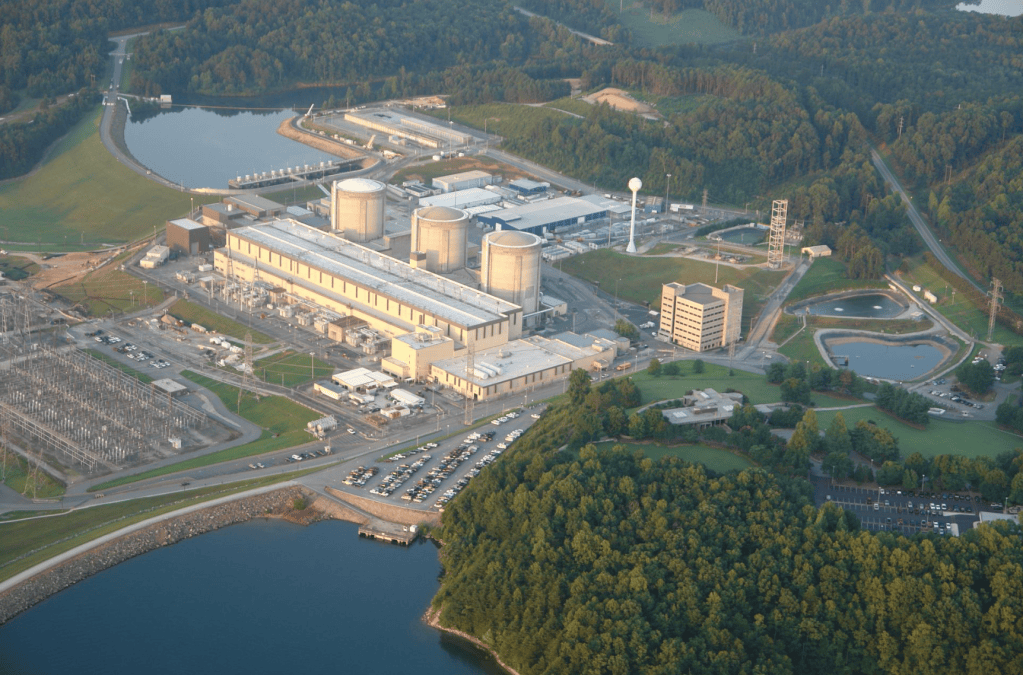
Building 250 GW of new Dispatchable electricity generating plants in 25 years is what the U.S. needs to provide for reshoring manufacturing, building SI Data Centers like those mentioned above and to provide for a growing population, more EV’s. Previous articles have described concerns for meeting this increasing Bulk Power Demand. A reminder of what 250 GW represents is the building of 100 power plants like the Oconee Nuclear Plant shown below. This plant was built in the 1970’s and is capable of generating 2500 MW of power. Needed by 2050 is the equivalent of 100 additional new plants the size of Oconee.The power can be generated by any of the eight primary energy sources listed above, but needed soon is the magnitude of 250 GW of new capacity.
The entire U.S. nuclear fleet is about 97 GW. It required over forty years to build this fleet of 94 reactors. Great as they are, the supply-chain to build 250 GW of new nuclear generating capacity by 2050 is just not likely due to still remaining federal regulations and supply chain limitations. Including talented engineers, welders, technicians and manufacturing capacity.
Most of the new Dispatchable generation is being provided by gas fuel. Natural gas provides about 43% of the total U.S. power generation per year. However, during peak winter demand, pipeline capacity is limited. Also, dependence on one fuel for 24/7 operation is risky. Therefore, a balanced generation portfolio including coal power is recommended.
Conclusions
- Electricity load growth is beyond the capacity of the U.S. supply chain to satisfy with new nuclear plants alone
- Natural gas already provides the largest portion of U.S. Dispatchable electricity generation, currently about 43%
- Coal fuel is readily available within U.S. borders, is proven, is storable on site and is amongst the lowest cost fuels for power generation
- New coal plants should be built as soon as possible to provide for the increased demand for electricity
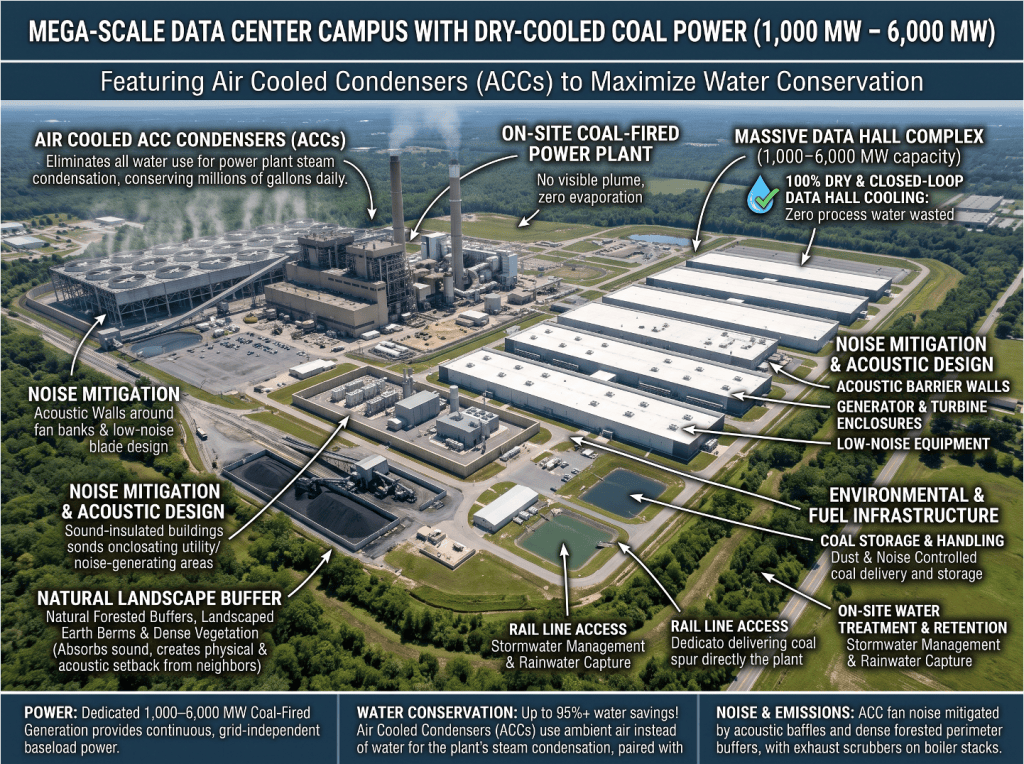
- SI Data Centers could use coal power plants such as the AI generated illustration shown below
- SI Data Centers today are critically important for America to remain the world’s largest economy
- Growth in the size and number of Data Centers is controlled by the available electricity generation capacity growth
- The opposition to new power plants and to Data Centers is against the best interests of America and in my opinion, based on fake science, like reference #15 below
- Data Centers and power plants can be built to achieve the minimum environmental footprint, including modest use of water for cooling by using closed cooling systems for the Data Centers and air-cooled condensers for the power generation facilities
- Data Centers and Power Plants can be built with sufficient open land sound buffer that noise will not be a factor
Dick Storm, November 2, 2026
References:
- NUCOR and Helion press release on plans for 500 MW Fusion Power Plant in S.C. https://nucor.com/news/?article=nucor-and-helion-to-develop-historic-500-mw-fusion-power-plant-122758#news_releases
- Amazon GW Ranch AI-Data Center to use 7.65 GW of Bulk Power: https://fieldnews.net/news/amazon-backs-765gw-gas-plant-largest-planned-in-us-for-off-grid-texas-ai-data-center
- Open AI, Project Camilia web page for Data Center planned for Effingham County, GA: https://projectcamellia.com/project-overview
- U.S. nuclear power fleet of 94 nuclear reactors and 97 GW capacity: https://www.eia.gov/todayinenergy/detail.php?id=65104
- Data Centers in the U.S. by Aterio: https://www.aterio.io/insights/us-data-centers
- META-LA Data Center, $50Billion, uses approx.. 2-5 GW of power, July 2026, Construct Connect, Business: https://news.constructconnect.com/meta-expands-louisiana-data-center-to-5gw-lifts-richland-parish-investment-above-50-billion
- President Trump Executive Order to promote AI-Data Centers and for them to provide their own power generation: https://www.whitehouse.gov/presidential-actions/2025/07/accelerating-federal-permitting-of-data-center-infrastructure/
- Deloitte Report on AI-Data Center Power Needs, the scale of AI data centers and their commensurate power needs are growing exponentially. By 2035, Deloitte estimates that power demand from AI data centers in the United States could grow more than thirtyfold, reaching 123 gigawatts, up from 4 gigawatts in 2024 (figure 1).1 AI data centers can require dramatically more energy per square foot than traditional data centers. For example, a five-acre data center augmenting central processing units with specialized graphics processing units might see its energy usage increase from 5 to 50 megawatts.2: https://www.deloitte.com/us/en/insights/industry/power-and-utilities/data-center-infrastructure-artificial-intelligence.html
- RAND Corp AI data centers could need ten gigawatts (GW) of additional power capacity in 2025, which is more than the total power capacity of the state of Utah. If exponential growth in chip supply continues, AI data centers will need 68 GW in total by 2027 — almost a doubling of global data center power requirements from 2022 and close to California’s 2022 total power capacity of 86 GW.: https://www.rand.org/pubs/research_reports/RRA3572-1.html
- AI Tool Discovery-The Real Numbers on Data Center Power Needs: https://www.aitooldiscovery.com/ai-infra/ai-data-center-power-consumption
- MIT Review on Data Centers: https://www.technologyreview.com/2025/05/20/1116327/ai-energy-usage-climate-footprint-big-tech/
- Goldman-Sachs on Ai-Data Center Load: https://www.goldmansachs.com/insights/articles/ai-to-drive-165-increase-in-data-center-power-demand-by-2030
- Global Electricity on Data Centers: https://www.globalelectricity.org/data-centers-energy-consumption/
- Opposition by Southern Environmental Law Center, Oct. 2026: https://www.selc.org/press-release/new-report-projects-harmful-air-pollution-from-proposed-canadys-gas-plant/?emci=47a09e3b-06c7-f111-bf5b-000d3a4fbe83&emdi=b80a496c-a1c8-f111-bf5b-000d3a4fbe83&ceid=2349636
- Harvard Study of Canadys Site by Dominici Lab: https://www.selc.org/wp-content/uploads/2025/10/Applied-Impact-Report-092225-F.pdf
- NEMA Load Growth update, June 2026: https://www.makeitelectric.org/wp-content/uploads/Documents/Public/grid-reliability-study-nema-deck-2026-final.pdf
- WUWT-Trump’s Policies are being undermined by Lawfare: https://wattsupwiththat.com/2026/06/15/trumps-energy-agenda-is-being-undermined-by-his-own-justice-department/
- Shippingport and Bruce Mansfield Coal Plant to AI-Data Center: https://salenazito.substack.com/p/ground-broken-on-a-rust-belt-powerhouse?r=kv1a9&utm_campaign=post-expanded-share&utm_medium=web
- Concerns of two experienced power engineers, (one nuclear and one coal power) on the adequacy of the U.S. Bulk Power Supply: https://powerfortheusa.com/2026/06/30/musings-of-a-nuclear-engineer-and-a-coal-power-engineer-on-the-adequacy-of-bulk-power-supply-for-the-future/
- 20% of America’s Primary Energy Should be From Reliable, Clean, Affordable and Storable on site, Coal Fuel: https://powerfortheusa.com/2026/10/11/coal-power-the-energy-source-that-should-be-providing-20-of-americas-primary-energy/


Leave a Reply