My prediction: Coal will rise in importance in providing the primary energy to power America. The two previous articles outlined concerns for adequate electricity generating capacity during peak periods in the winter and summer and also the enormous challenge of building the equivalent of 100 new 2,500 MW power plants.
The Challenge is Peak Electricity Load Growth
The peak load growth of the lower 48 states keeps growing. A few years ago it was only 735 GW during peak summer or winter periods. Peak loads by 2030 are forecasted by FERC to exceed 860 GW. If AI-Data Center load growth was considered alone, the increased Demand could be over 100 GW by 2030. Keep in mind, 100 GW is an enormous amount of electricity production. It is the equivalence of 40 new power plants the size of Duke Energy’s Roxboro Electric Generation station. Power plants of about 2500 MW capacity have required 14 to 22 years to design, build and startup. The nuclear plant expansion of units 3 & 4 at Plant Vogtle took about 10 years for 2200 MW. Needed is 100 new 2,500 MW plants like Roxboro or Oconee. Even if the Democrats and NGOs that oppose new coal plants in the U.S. quit their insidious and harmful Lawfare, it would be very difficult to build 100 new 2,500 MW coal plants by 2035. But, we should begin as soon as possible. Here is why I believe that is so.
Coal Should Provide 20% of the U.S. Primary Energy
America has been powered by about 100 Quadrillion BTUs of PRIMARY thermal energy for the last 25 years or so. I have written on this before. This production and consumption of 100 Quadrillion BTUs is shown on the chart below.
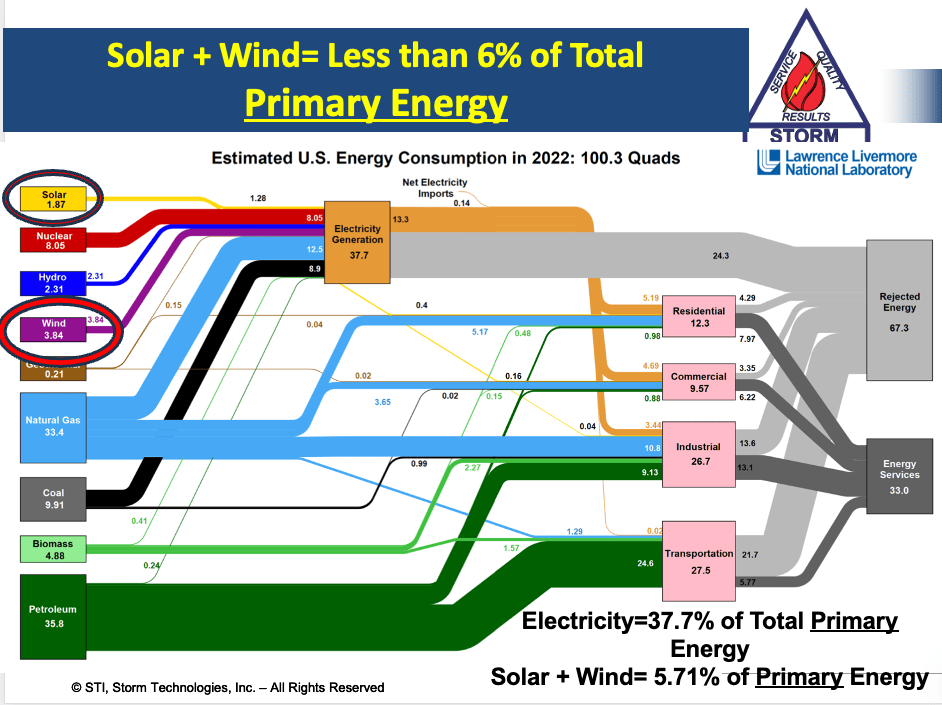
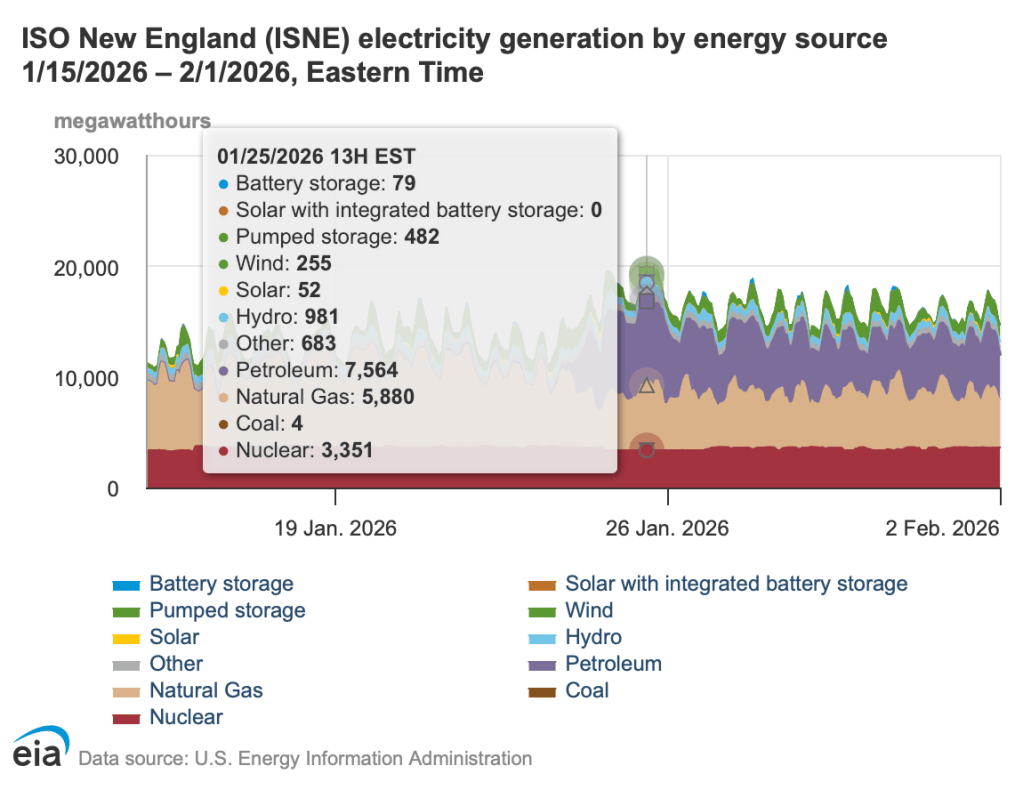
Notice that coal in 2022 provided about 8.34 quadrillion BTUs which conveniently for this year, comes out to about 8.3% of America’s total primary energy. Electricity uses about 38% of total primary energy. There are few authors on energy and electricity issues that discuss primary energy, because it becomes confusing for folks that are not involved in the business. However, coal being a part of the total primary energy mix does in fact impact jet fuel, Diesel fuel and other forms of energy. How? Because coal generated electricity is dispatchable when needed, especially in the winter to provide power to the Grid that can be transmitted across state lines to distant areas of demand that may be using backup Diesel or Jet Fuel in gas turbines because that is all they have. An example of this is New England last winter. A graphic of power generation by fuel for the ISO-New England with over 7500 MW of oil fuel being used for power generation. At the prices of jet fuel and Diesel, this is some very expensive power generation. A calculation of the cost of producing an electricity kWh from primary energy at a given cost $/mmBTU is here.
The Cold Hard Truth of Winter Electricity Generation and Demand
Frank Clemente and Fred Palmer published a very informative article in RealClear Energy. Here are a couple excerpts:
“2014 – Polar Vortex Coal provided the majority of electricity but, even more importantly, coal power increased 92% YOY to meet the load. Oil increased 12%, Wind 9% and Nuclear 7%. Natural gas (NG) generation decreased 6% YOY and Hydro declined 15%. Solar was irrelevant.
2019 – “Cold Event” In the PJM region (65 million people) coal power led all fuels at 37% of electricity. All renewables combined contributed only 7% of electricity. In the MISO region (45 million people), coal provided 50 % of electricity and operated at 73 % of installed capacity.
2021 – Winter Storm Uri impacted much of the U.S. In the MISO grid, which stretches across 15 states and Manitoba, coal-based generation surged 36 percent and met almost 50% of demand. Solar power was virtually non-existent, and MISO reported that “output from wind generation was low throughout the duration of the event.” NG prices increased from less than $3 per MMBTU to as much as $700.
2024 – Winter storm Energy Ventures Analysis (EVA) reported coal-fired power plants showed the most significant increase in utilization rates: “Wind generation faced challenges… while solar generation was entirely or almost entirely absent.” Further, EVA concluded: “Higher shares of solar facilities and fewer dispatchable resources likely would have resulted in widespread power outages “.
Winter + AI-Data Centers Will Increase the Need for Coal
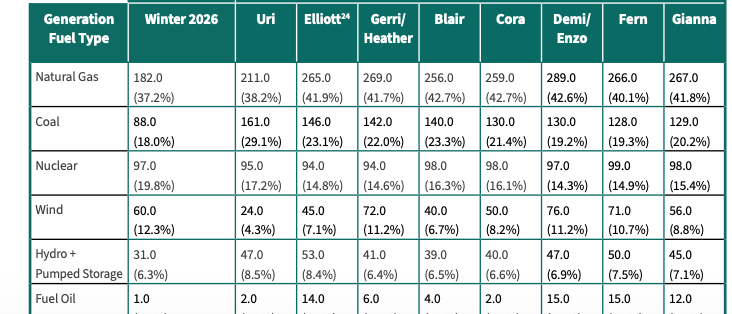
The 2026 FERC “Report | System Performance Review of the Winter 2026 Arctic Cold Period Reliability Assessment” shows the importance of coal power during prior extreme winter events. The table excerpt of that report is shown below. Note that during extreme winter cold, coal power has provided up to 29% of the lower 48 states electricity generation.
Electricity Growth from Data Centers and Re-Shored Manufacturing Could be over 200 GW by 2035
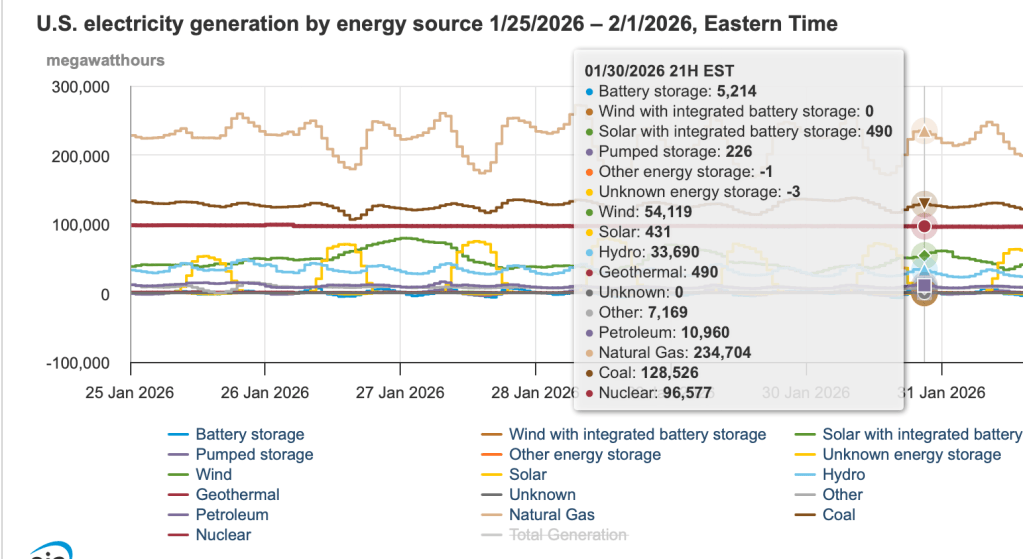
Just last winter in January 2026, the screenshot of the U.S. Grid is shown below.
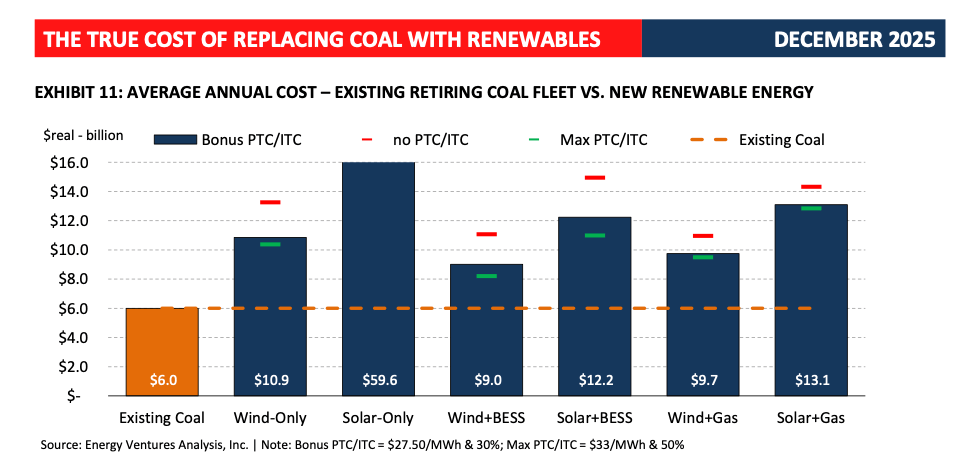
America’s Power commissioned a report of the cost of replacing coal plants with renewables. The chart below is from that December 2025 report by Energy Ventures Analysis, Inc.
Remember a Few Years Ago when the Rallying Cry Was, “Electrify Everything”?
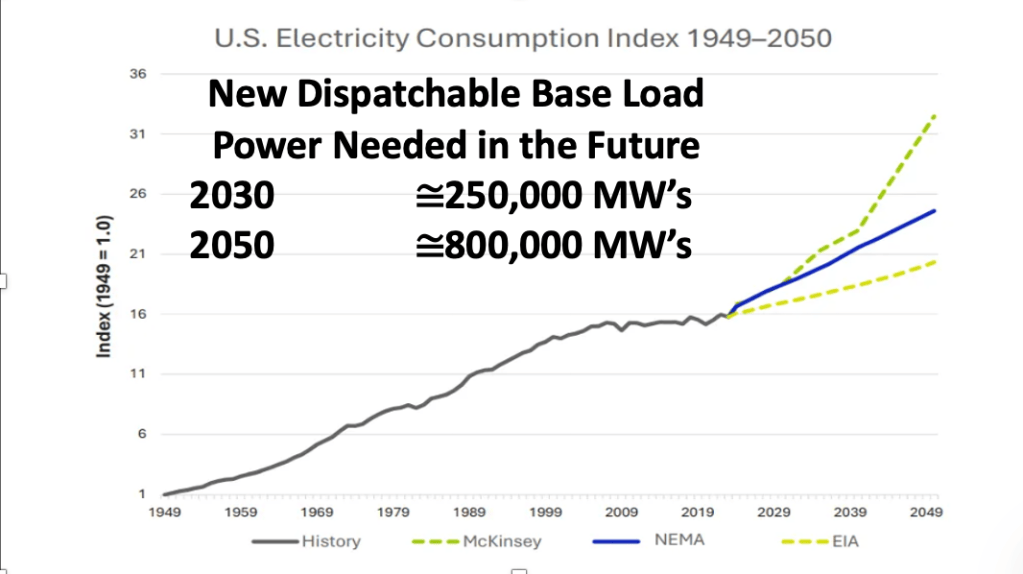
I remember and wrote this article in 2024. Well, we are not likely to electrify everything any time soon. But, new electrical loads are significant, especially Data Centers, whether needed for AI or just Cloud computing. Then there is reshoring of aluminum and steel manufacturing, plus population growth and EV’s. The bottom line is, electricity demand is growing rapidly and we have not built a major new coal plant since 2013 and only started up 2200 MW of new nuclear in the last 10 years. Needed is 250 GW by the next ten years. 250 GW is equivalent to 100 new power plants the size of Oconee or Roxboro. Each of them (one nuclear and one coal) took over ten years to complete when the Supply-Chain of talent and manufacturing was at it’s peak.
The Solution: Build New Coal Plants Now
Some of the reasons to build new coal plants have been covered in previous articles here, here and here. Global natural gas supply shortages this winter will likely create much more interest in coal power in the U.S. and other countries in the West. Why? Well, here are ten reasons why new coal plants should be built.
1. Proven to be reliable and affordable
2. They provide Dispatchable power generation
3. Long duration onsite fuel storage is inherent in the design
4. America is the Saudi Arabia of Coal and the infrastructure to transport coal from the mine to the power plant is still in tact
5. Manufacturing Supply-Chain can be updated
6. Plants are Robust with long Life
7. Operations and Maintenance Personnel Training is Established
8. Provide “Rotational Inertia” to smoothen the 60 cycle power curve
9. Energy Density of coal is high. A 2,500 MW coal plant can be built on a square mile of land
10. Properly designed and maintained Coal plants can perform 24/7 in all weather conditions and provide a resilient supply of Bulk Power
AI-Data Center Bulk Power Demand
I am a newcomer to using AI and have found it to be quite helpful in saving time for research. Data centers are not just AI, they serve all of us in many ways, 24/7 every day, some examples are: Social Media and email, Streaming Services, On-Line Banking, Cloud Photo Storage, GPS Navigation, online shopping and of course, AI. Some electricity load growth forecasts show Data Center electricity demand increases to be in the range of 190 GW by 2035. Total electricity use by Data Centers is expected to be about 4.4 % of the total U.S. generation.
America Can Still Provide 20% of Needed Primary Energy from Coal, as we did in 2008
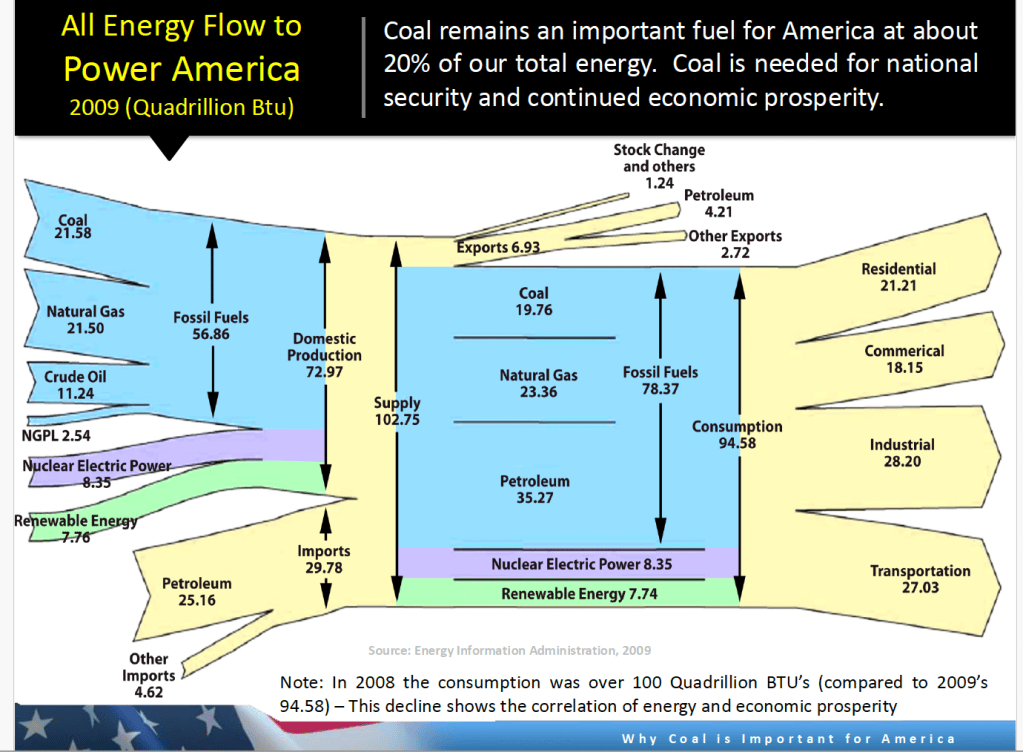
America has used right at the same total quantity of primary energy since about the year 2000. Here is a Sankey Diagram showing the total primary energy use in the year 2009. Total, about 94.6 Quadrillion BTUs. Coal’s portion, 21.6 Quadrillion BTUs. The railroad tracks and barge channels that were in place in 2009 are still capable of transporting a billion tons of coal per year, which is about 22 quadrillion BTUs.
Conclusions
- By 2050 not only will the electric load grow, but the existing generation fleet will be aging. For example, the nuclear fleet built in the 1970’s and 1980’s will be approaching 80 years.
- The U.S. has had several very cold winters storm events in recent years. During these winter storms coal power was important for reasons of both economic dispatch and because pipeline supplied gas was peaking in pricing or in some cases curtailed
- Coal power was delivering about 20% of the electricity needed during recent winter peak periods. Come winter 2026-2027, it is likely that the electricity demand peaks will be even greater and the coal plants even more important. Take for example, the ISO-New England experience of shutting down nearly all of their coal plants and needing to fire jet fuel and Diesel during extreme cold periods.
- The peaks of summer and winter are a challenge for Utilities. Summer and winter peaks of the 48 U.S. states has grown from about 725 GW five years ago to over 760 GW last winter. This coming Dec. 2026-January 2027 winter peak is likely to surpass last years. As the electricity growth chart above shows, both Base load and peak loads are likely to increase. The new electricity Demand of Re-Shored and growing U.S. Manufacturing, AI-Data Centers and EVs all contribute to the 2-5% growth per year.
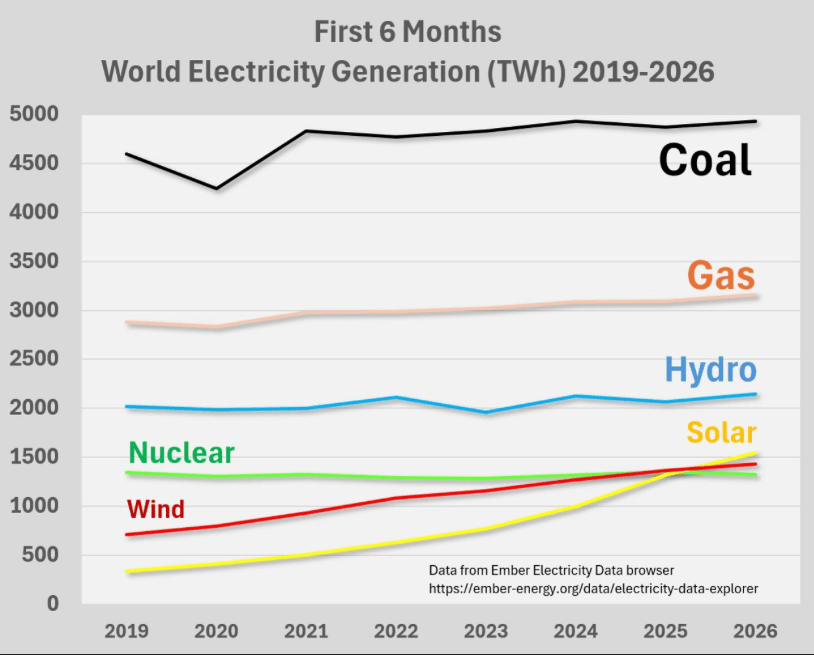
- World electricity growth as shown below, has grown since 2019. This chart is from Mike Caravaggio’s LinkedIn post using data from Ember. Note the strong dependence of primary energy from coal by the world. This chart is for Jan.-June 2019-2026.
Respectfully,
Dick Storm, October 11, 2026
References and information for further research on the importance of conventional forms of energy
- Fred Palmer and in Real Clear Energy.org, “Close Coal Plants and Increase the Cost of Electricity”, Oct. 8, 2026: https://www.realclearenergy.org/articles/2026/10/08/you_pay_each_month_for_closing_coal_power_1210433.html
- Scott Grout on the importance and growth of fossil fuels for electricity generation on Substack: https://substack.com/profile/35040321-dick-storm/note/c-358319485?utm_source=notes-share-action&r=kv1a9
- Providing a Sustainable Million BTUs per Day/Person, May 17, 2022: http://dickstormprobizblog.org/2022/05/17/providing-a-sustainable-million-btus-per-day-per-person-by-fuel-source/
- 830,000 BTUs per Day/Person, Sept. 2021: http://dickstormprobizblog.org/2021/09/16/830000-btus-per-day-person/
- EIA on conversions of Primary Energy:
https://www.eia.gov/tools/glossary/index.php?id=Primary+energy - White House EO on Bulk Power Supply, Aug. 26, 2026: https://www.whitehouse.gov/presidential-actions/2026/08/declaring-a-national-emergency-to-secure-the-united-states-bulk-power-system/
- President Trump and Lee Zeldin Repeal Obama/Biden EPA Rules against coal plants: https://energysecurityfreedom.substack.com/p/trumps-killing-of-radical-co2-rules?r=kv1a9&utm_campaign=post-expanded-share&utm_medium=web
- Congressional Report on “How is Primary Energy Defined and Used”:
https://www.congress.gov/crs_external_products/R/PDF/R48270/R48270.1.pdf - Dr. Lars Schernikau for Clintel on the Illusion of Free Energy:
https://clintel.org/the-primary-energy-illusion-why-free-power-isnt-free-at-all/ - Scott Grout, excellent article on the importance of fossil fuels and the misguided politicians, October 11, 2026: https://scottgrout.substack.com/p/the-wrong-villain-why-blaming-suppliers?r=kv1a9&utm_campaign=post-expanded-share&utm_medium=web
- Nick Deiuliis On PJM Power shortage, not Data Center caused: https://nickdeiuliis.com/commentary/30-to-1-retired-baseload-not-data-centers-broke-pennsylvania
- NERC Winter 2026-2027 Report: https://www.nerc.com/globalassets/our-work/assessments/nerc_wra_2025.pdf
- America’s Power Feb. 2026 Report: https://americaspower.org/another-red-alert-nercs-long-term-reliability-assessment/
- America’s Power on the Cost of Replacing Coal with Renewables, Dec. 2025: https://americaspower.org/wp-content/uploads/2025/12/Understanding-the-True-Cost-of-Replacing-Existing-Coal-Dec-2025-2.pdf
- Winter Electricity Supply Strain by NRECA, : https://www.electric.coop/surging-power-demand-may-strain-parts-of-u-s-grid-this-winter-nerc-says
- EIA Winter Storm Fern and past five years of winter peaks: https://www.eia.gov/todayinenergy/detail.php?id=67084
- Shutting down coal plants increases electricity costs: https://www.realclearenergy.org/articles/2026/10/08/you_pay_each_month_for_closing_coal_power_1210433.html
- Blue States = High Electric Rates: https://energybadboys.substack.com/p/all-50-blue-states-high-rates-profiles
- Coal Corner https://www.coaliscornerstone.com
- FERC-NERC Arctic Cold Energy Report, Sept. 2026: https://www.ferc.gov/media/report-system-performance-review-winter-2026-arctic-cold-period
- ISO-NE Winter 2026 Newsletter on rates and fuels: https://isonewswire.com/2026/02/25/monthly-wholesale-electricity-prices-and-demand-in-new-england-january-2026/#:~:text=Table_title%3A%20Monthly%20wholesale%20electricity%20prices%20and%20demand,Use2%20%7C%2011%2C371%20GWh%20%7C%205.2%25%20%7C
- ISO-New England Newsletter, December 2025: https://isonewswire.com/2026/02/02/monthly-wholesale-electricity-prices-and-demand-in-new-england-december-2025/
- EIA ISO—NE Jan. 2026: https://www.eia.gov/electricity/gridmonitor/expanded-view/electric_overview/balancing_authority/ISNE/GenerationByEnergySource-14/edit
- Scott Grout on Fossil Fuels over the years: https://substack.com/profile/35040321-dick-storm/note/c-358319485?utm_source=notes-share-action&r=kv1a9


Leave a Reply